
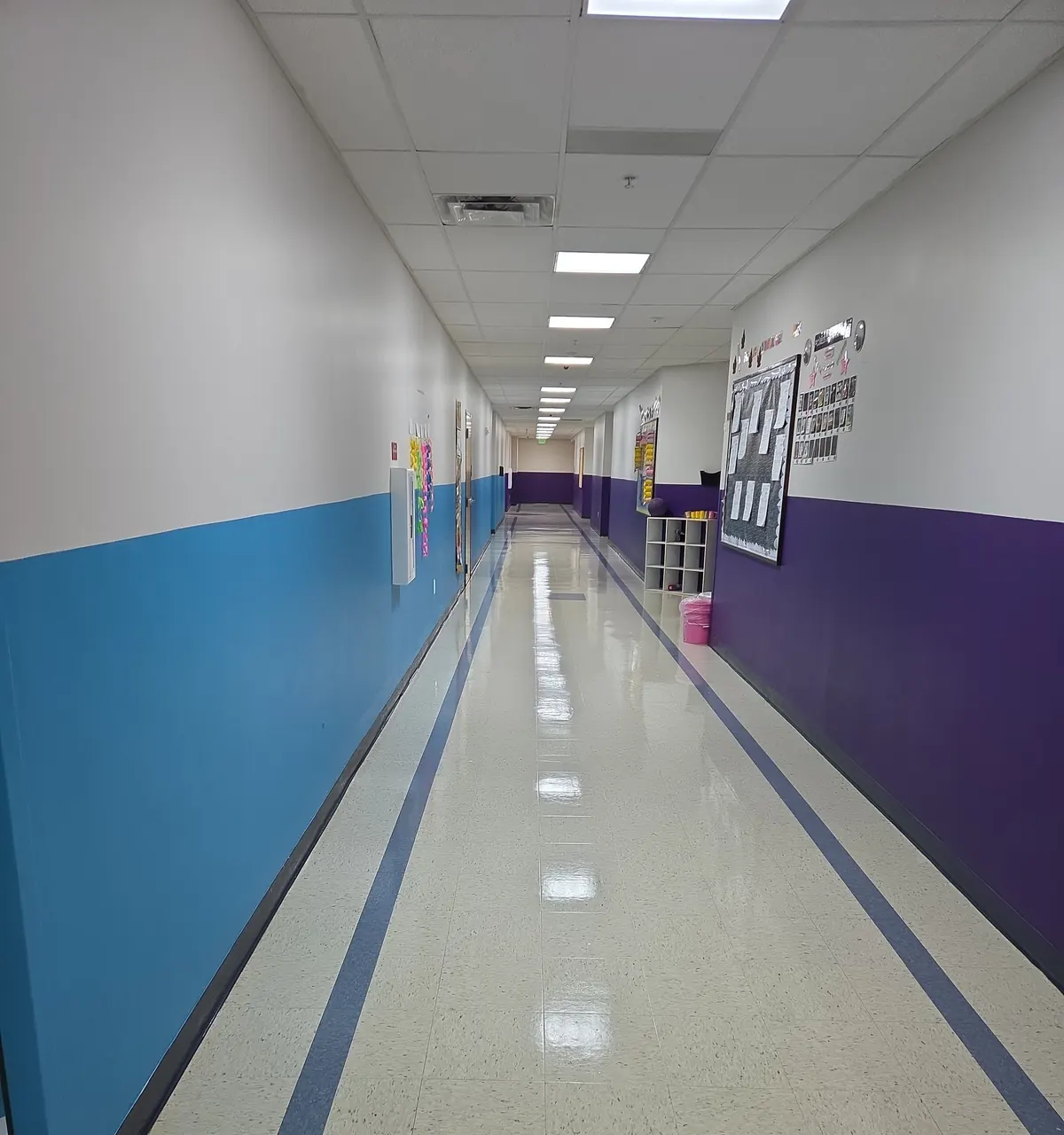
Vinyl composition tile, usually called VCT, is the floor you see in most schools, clinics, offices, break rooms and retail stores. It is tough, affordable and easy to replace one tile at a time. What VCT does not do well is protect itself. The tile is porous, so it depends on layers of floor finish (the "wax") to resist scuffs, stains and wear. When that finish wears thin or gets dirty and yellow, the floor looks dull no matter how often it is mopped.
That is why facility managers keep asking the same question: how often should the floor be fully stripped and refinished? The honest answer is that it depends on how the floor is used and how it is maintained between visits. This guide explains the typical schedule, what pushes it shorter or longer, and the signs that tell you a full strip is due.
The typical schedule for VCT stripping and waxing
For most commercial buildings, a full strip and wax happens once or twice a year. A full strip means the old finish is removed down to the bare tile with a chemical stripper and a floor machine, the floor is rinsed and neutralized, and then several fresh coats of finish are applied and allowed to cure.
Between full strips, the floor is usually maintained with a scrub and recoat. That is a lighter service where only the top layers of finish are scrubbed, and one or two new coats go on top. Many buildings do a scrub and recoat every three to six months and save the full strip for once a year.
High traffic areas such as school corridors, cafeterias, lobbies and grocery aisles often need attention more often than private offices or storage rooms. It is common to strip the busiest hallways every year while side rooms stretch to eighteen months or longer.
What makes a floor need stripping sooner
Foot traffic is the biggest factor. Every shoe carries grit that acts like sandpaper on the finish. A hallway that handles hundreds of students a day wears through finish far faster than a quiet office.
Outdoor soil matters too. Red clay, sand and wet leaves tracked in from parking lots and playgrounds stain finish and grind into it. In the Charlotte area, rainy weeks and clay soil around new construction can make entrances wear out quickly, which is why walk off mats at every door are one of the best investments a building can make.
Rolling loads also shorten the cycle. Carts, hand trucks, wheelchairs and cafeteria tables put concentrated pressure on the floor and leave tracks. Spills of drinks, cleaning chemicals or food that sit too long can soften and discolor finish.
Finally, poor daily maintenance is a common reason floors need an early strip. Using the wrong cleaner, mopping with dirty water or letting dust build up causes haze and buildup that a recoat cannot fix.
Signs it is time for a full strip and wax
Yellow or gray tint. Old finish that has trapped dirt between layers turns yellow, especially along walls and in corners where machines do not reach. Recoating over it only seals the discoloration in.
Dull traffic lanes. If the center of a hallway looks flat and worn while the edges still shine, the finish in the lane is gone and the tile is exposed.
Black marks and scuffs that do not come off with daily cleaning, plus powdering or flaking finish.
Uneven buildup around edges and doorways. Years of recoating without stripping leave thick, cloudy layers in low traffic zones.
Water spots that soak in. When a spill leaves a mark on the tile itself, the protective layer is no longer doing its job.
Why the number of finish coats matters
A good strip and wax is not just about removing the old layers. The new finish needs enough coats to protect the tile. Many floor care crews apply four to six thin coats on high traffic floors, letting each coat dry before the next. Thin coats dry harder and clearer than thick ones, and the extra layers give the floor room to be scrubbed and recoated later without reaching bare tile.
After the finish cures, a high speed burnisher can bring the floor to a deeper gloss. Burnishing is also a regular maintenance step for many buildings, because it restores shine between recoats.
Building a schedule that fits your facility
The best schedule is the one built around how your building actually works. Schools usually plan the full strip during summer or winter break, when hallways are empty for several days. Offices, clinics and retail stores often prefer nights and weekends so the floor can cure without traffic.
A simple plan for many commercial properties looks like this: daily dust mopping and damp mopping with a neutral cleaner, periodic burnishing in high traffic areas, a scrub and recoat every few months, and a full strip and wax once a year. Adjust from there based on how the floor looks.
Deep Cleaning High Quality is based in Charlotte and works Monday to Friday 24 hours, plus weekends from 8am to 5pm, so floor work can be scheduled when your building is closed. In September 2026 our crew stripped and refinished school corridors in Kannapolis, NC, and that kind of project is planned around the hours the building is empty.
Different areas, different schedules
One building rarely needs the same schedule everywhere. Think of the floor in zones. Entrances and main corridors carry most of the traffic and soil, so they wear first and usually need the most frequent burnishing, recoats and full strips. Classrooms, offices and exam rooms see moderate traffic, and the finish there often lasts much longer. Storage rooms, closets and low use areas may go two years or more between full strips.
Cafeterias, break rooms and kitchens are a special case. Food, grease and sugary drinks attack finish and make floors sticky, so these areas often need a scrub and recoat more often than hallways with similar traffic. Restrooms with VCT also wear quickly because of water and harsh cleaners.
Planning by zone saves money. Instead of stripping the whole building every year, you can strip the busiest zones on a yearly cycle and give quieter zones a scrub and recoat. A floor care crew can walk the building with you, or review photos, and mark which areas need what.
What happens if you wait too long
Waiting too long between strips is not just a cosmetic problem. Once the finish is gone in traffic lanes, grit starts wearing the tile itself. Bare VCT absorbs dirt and stains, and those stains can become permanent. Tiles that lose their surface may need to be replaced, which costs far more than regular refinishing.
Old, thick, yellow layers also take more time and chemical to remove. A floor that has gone several years with only recoats can take noticeably longer to strip, which raises the cost of the job. Keeping a regular cycle is usually the cheaper path over time.
Getting an estimate
Because every floor is different, the right frequency is easier to recommend after seeing the space. Send photos of your floors by WhatsApp or text, or ask for a free estimate. There is no visit fee, and we will tell you whether your floor needs a full strip now or whether a scrub and recoat will carry it a few more months.
Common questions
01Can I just keep adding coats of wax instead of stripping?
For a while, yes. Scrub and recoat is a normal maintenance step. But if the floor is yellow, scuffed into the tile or full of trapped dirt, new coats seal the problem in. At that point a full strip is the only fix.
02How long does a VCT floor need to cure after waxing?
Most finishes can take light foot traffic after several hours, but they keep hardening for a few days. Heavy furniture and rolling loads should wait longer when possible. We plan the work so the floor has time to cure before the building reopens.
03Do you strip and wax floors in schools and offices around Charlotte?
Yes. Commercial floor stripping and waxing is our main service, and we serve Charlotte, Concord, Kannapolis, Greensboro, Raleigh, Durham and Fayetteville, NC.