A professional strip and wax gives your floor a fresh start, but what happens in the following weeks decides how long that shine lasts. Two buildings can get the exact same service and look completely different three months later, simply because one has a simple daily routine and the other does not.
The good news is that maintaining a waxed floor does not require special skills. It requires the right tools, the right cleaner and consistency. Here is a practical routine for schools, offices, clinics, churches and stores.
Stop dirt at the door
Most floor damage comes from grit carried in on shoes. Long walk off mats inside and outside each entrance catch a large share of that grit before it reaches the finish. Mats should be long enough for several steps and cleaned or vacuumed regularly, because a saturated mat stops working.
In the Charlotte area, red clay and rain make entrances especially vulnerable. Pay extra attention to doors near parking lots, playgrounds and construction zones.
Dust mop every day
Dry soil scratches finish every time someone walks on it. A treated dust mop pushed through hallways and rooms once a day, or more in busy areas, removes that grit. Shake out or replace the mop head often so you are removing dirt, not spreading it.
Damp mop with a neutral cleaner
Use a neutral pH floor cleaner made for finished floors, diluted exactly as the label says. Strong degreasers, ammonia, bleach or all purpose cleaners can soften and dull the finish. Too much cleaner leaves a sticky film that attracts dirt.
Change mop water frequently. Mopping with dirty water just moves soil around and leaves a gray haze. For large areas, an auto scrubber with the right pad and a neutral solution does a more consistent job than a string mop.
Handle spills and scuffs quickly
Wipe spills as soon as they happen, especially sugary drinks, cleaning chemicals and anything acidic. Black heel marks can often be removed with a tennis ball on a stick or a soft white pad, without scrubbing the finish away.
Put felt pads or glides on chair and table legs, and avoid dragging heavy furniture. Use carts with soft wheels when possible.
Burnish on a schedule
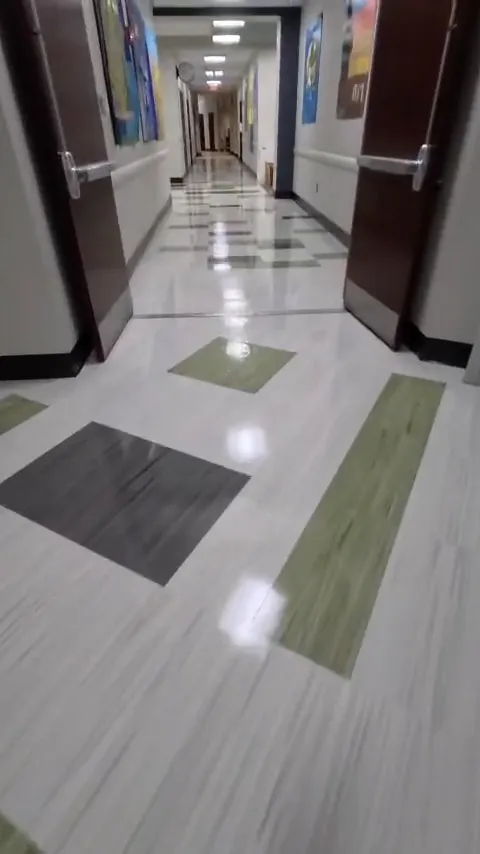
In high traffic areas, regular burnishing with a high speed machine restores gloss and tightens the surface of the finish. Many facilities burnish weekly or monthly depending on traffic. Burnishing works best on a clean floor, so dust mop and damp mop first.
Plan the next professional visit
Even with great daily care, finish wears down. Schedule a scrub and recoat when traffic lanes start looking dull, typically every few months in busy buildings, and a full strip and wax about once a year. Planning ahead lets you pick a quiet time, such as a school break or a weekend.
A simple checklist for custodial staff
Morning: shake out or vacuum entrance mats, dust mop main hallways and lobby, spot clean spills and heel marks.
During the day: check entrances after rain, wipe spills right away, keep a wet floor sign handy.
Evening: dust mop all areas, damp mop with neutral cleaner, change mop water between areas, clean the mop heads and let them dry.
Weekly: burnish high traffic areas, deep clean mats, check chair glides and furniture pads, note any spots where the finish looks worn.
Posting a checklist like this in the custodial closet keeps the routine consistent even when staff changes.
Seasonal care in North Carolina
Seasons change how floors wear. Spring brings heavy pollen that settles on entrances and gets tracked inside, so mats need more frequent cleaning. Summer storms bring water and mud. Fall leaves break down into fine grit under shoes. On the few cold, wet winter days, any de icing products used outside can leave a white film on floors that should be removed with a neutral cleaner rather than left to dry.
Adjusting the routine by season, such as adding extra mats in spring and extra dust mopping in fall, keeps the finish protected all year.
Common mistakes to avoid
Using the wrong chemical, flooding the floor with water, letting entrance mats overflow, skipping dust mopping, and recoating over yellow or dirty finish. Each of these shortens the life of your floor and leads to an earlier full strip.
Need help keeping floors in shape?
Deep Cleaning High Quality strips, waxes, recoats and burnishes commercial floors around Charlotte and other North Carolina cities with our own equipment. We can recommend a maintenance schedule for your building after seeing photos. Send them by WhatsApp or text to (704) 386-7143 for a free estimate, with no visit fee.
Common questions
01What cleaner should I use on a waxed floor?
A neutral pH floor cleaner made for finished floors, diluted as the label says. Avoid bleach, ammonia and strong degreasers, which dull and soften the finish.
02How often should a waxed floor be burnished?
It depends on traffic. Busy hallways and lobbies are often burnished weekly or monthly, while quiet rooms may need it only occasionally.
03Why does my floor look hazy after mopping?
Usually too much cleaner, the wrong cleaner or dirty mop water. Rinse the mop often, measure the cleaner and switch to a neutral product.